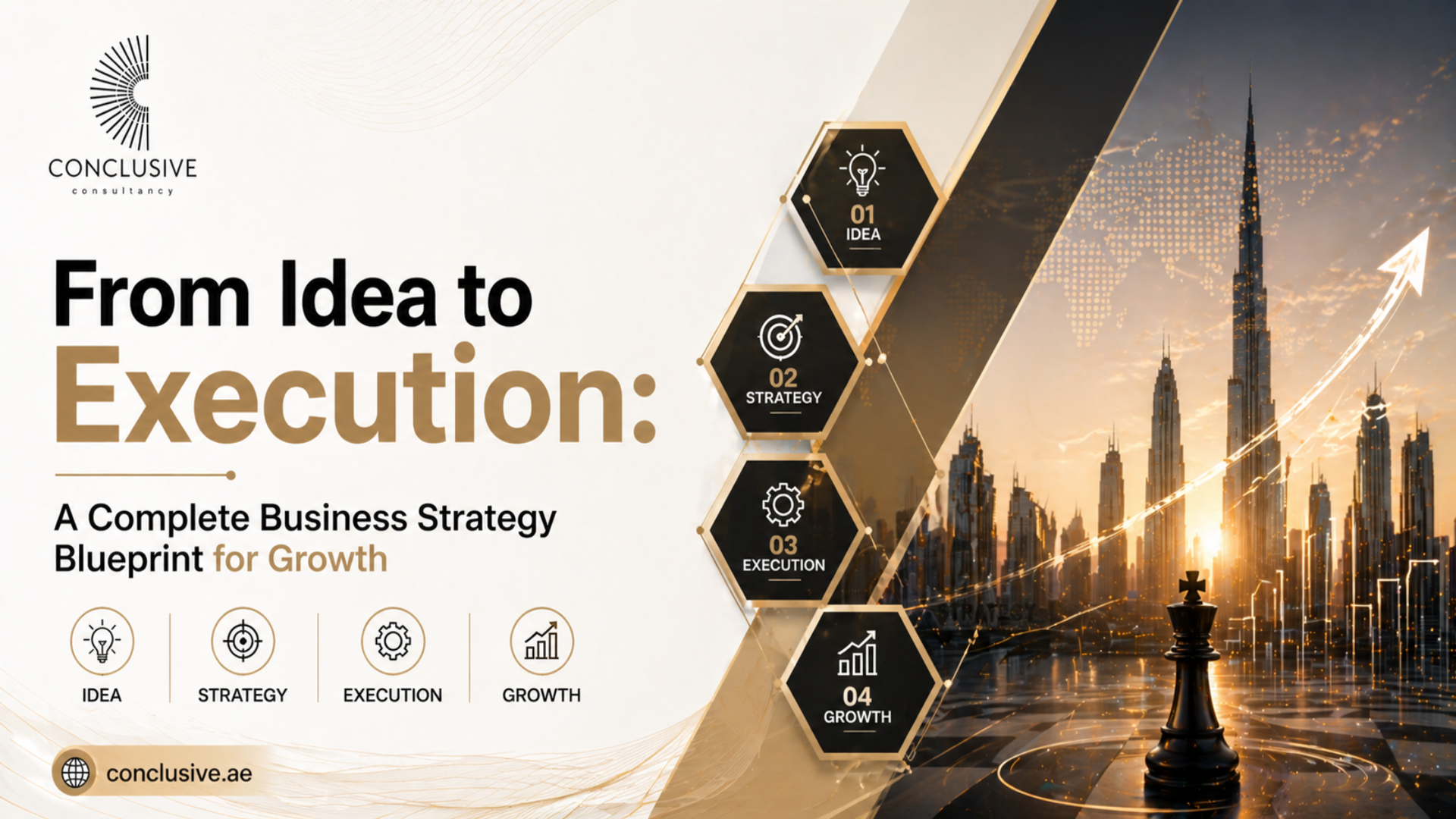
Most businesses don’t fail because of bad ideas;they fail because execution breaks down. The real challenge isn’t just business strategy development; it’s building a reliable strategy to execution process that consistently delivers results.
Many founders create detailed plans but struggle to turn them into action. Teams lose alignment, priorities shift, and progress slows. This blueprint is designed to help startups and growing businesses bridge that gap and achieve sustainable growth.
Why Strategy Alone Isn’t Enough
A strategy without execution is just intent. Many organizations face issues such as unclear ownership,a lack of measurable goals, and poor communication. These gaps don’t come from bad planning;they come from weak execution systems.
Successful businesses focus on building processes that ensure accountability, alignment, and continuous tracking. Execution is not a one-time effort; it’s a system that must be maintained and improved over time.
The G.R.O.W.T.H Execution Model
To simplify execution, use the G.R.O.W.T.H framework:
- G – Goal Setting: Define clear outcomes
- R – Resource Alignment: Allocate people, budget, and tools
- O – Operational Planning: Build a business implementation plan
- W – Workflow Execution: Execute through structured processes
- T – Tracking & KPIs: Measure performance
- H – Optimization: Apply continuous improvement strategies
This model ensures that every stage of execution is aligned with growth objectives.
Step-by-Step Business Strategy Blueprint
1. Idea Validation & Market Research
Before execution, validate your idea. Understand customer pain points, analyze competitors, and test demand using simple methods like landing pages or pilot campaigns.
For example, many startups validate ideas through pre-launch signups. This reduces risk and ensures there is real market demand before investing heavily.
2. Business Strategy Development
Once validated, define your strategic direction. Identify your target audience, refine your value proposition, and determine revenue streams.
Strong business strategy development ensures that all future actions are aligned with long-term goals and market needs.
3. Defining Clear Goals & KPIs
Execution requires measurable targets. Businesses should track key metrics such as revenue growth, customer acquisition cost, and conversion rates.
Instead of tracking too many numbers, focus on a few high-impact KPIs and review them consistently through a simple dashboard.
4. Creating a Business Implementation Plan
A strategy becomes actionable when it is broken down into tasks. This includes assigning responsibilities, setting deadlines, and defining workflows.
A clear business implementation plan ensures that teams know exactly what to do and how success will be measured.
5. Strategy to Execution Process
Execution must follow a consistent rhythm. Weekly reviews, progress tracking, and regular adjustments help maintain momentum.
The strategy to the execution process should be flexible enough to adapt to changing conditions while maintaining focus on core objectives.
6. Resource Allocation & Team Alignment
Growth depends on how effectively resources are used. Businesses must allocate budgets strategically and ensure that teams are aligned with goals.
When roles are clearly defined and communication is strong, execution becomes faster and more efficient.
7. Change Management in Business
Execution often requires change. New systems, tools, or processes can create resistance if not managed properly.
Effective change management in business involves clear communication, proper training, and gradual implementation to ensure smooth transitions.
Financial & Leadership Considerations
Execution must be supported by financial discipline. Businesses should allocate budgets based on ROI and continuously evaluate performance.
At the same time, leadership plays a critical role. Founders and managers must prioritize speed, make data-driven decisions, and maintain focus on key outcomes. Strong leadership ensures that execution stays on track.
Tools That Improve Execution
Technology can significantly enhance execution. Project management tools help track tasks, CRM systems manage customer interactions, and analytics platforms provide performance insights.
Using the right tools improves visibility, accountability, and decision-making across teams.
Execution Challenges & Solutions
Most businesses face similar execution challenges. Misalignment between teams can slow progress, while a lack of accountability leads to missed deadlines. Poor tracking systems make it difficult to measure performance.
These issues can be solved by implementing regular alignment meetings, assigning clear ownership, and using KPI dashboards for tracking progress.
Risk Management & Contingency Planning
Every strategy carries risk. Businesses must identify potential challenges early and prepare backup plans.
Scenario planning allows organizations to respond quickly when things don’t go as expected. Thinking ahead reduces uncertainty and improves decision-making.
Growth Strategy for Startups
A strong growth strategy for startups focuses on scalability. One effective approach is the IDEA → PLAN → EXECUTE → SCALE model, which ensures a structured path from concept to expansion.
For instance, a D2C brand scaled significantly by optimizing marketing funnels, tracking key metrics, and reinvesting in high-performing channels. This highlights the importance of disciplined execution.
Continuous Improvement Strategies
Execution is not a one-time effort; it’s an ongoing process. Businesses must continuously collect feedback, track performance, and optimize their strategies.
Strong continuous improvement strategies help organizations adapt to market changes and maintain long-term growth.
Actionable Takeaways
- Validate your idea before investing heavily.
- Build a clear business implementation plan.
- Focus on execution systems, not just strategy.
- Align teams and define accountability.
- Track performance and optimize continuously.
Conclusion
Ideas create potential, but execution creates results. Businesses that succeed are those that combine strong business strategy development with structured execution systems.
If you want sustainable growth, the focus must shift from planning to consistent execution.
Ready to Turn Your Strategy Into Real Growth?
If you’ve read this far, you already understand one thing: execution is the real competitive advantage.
But knowing what to do and actually implementing it are two different things.
That’s where we help.