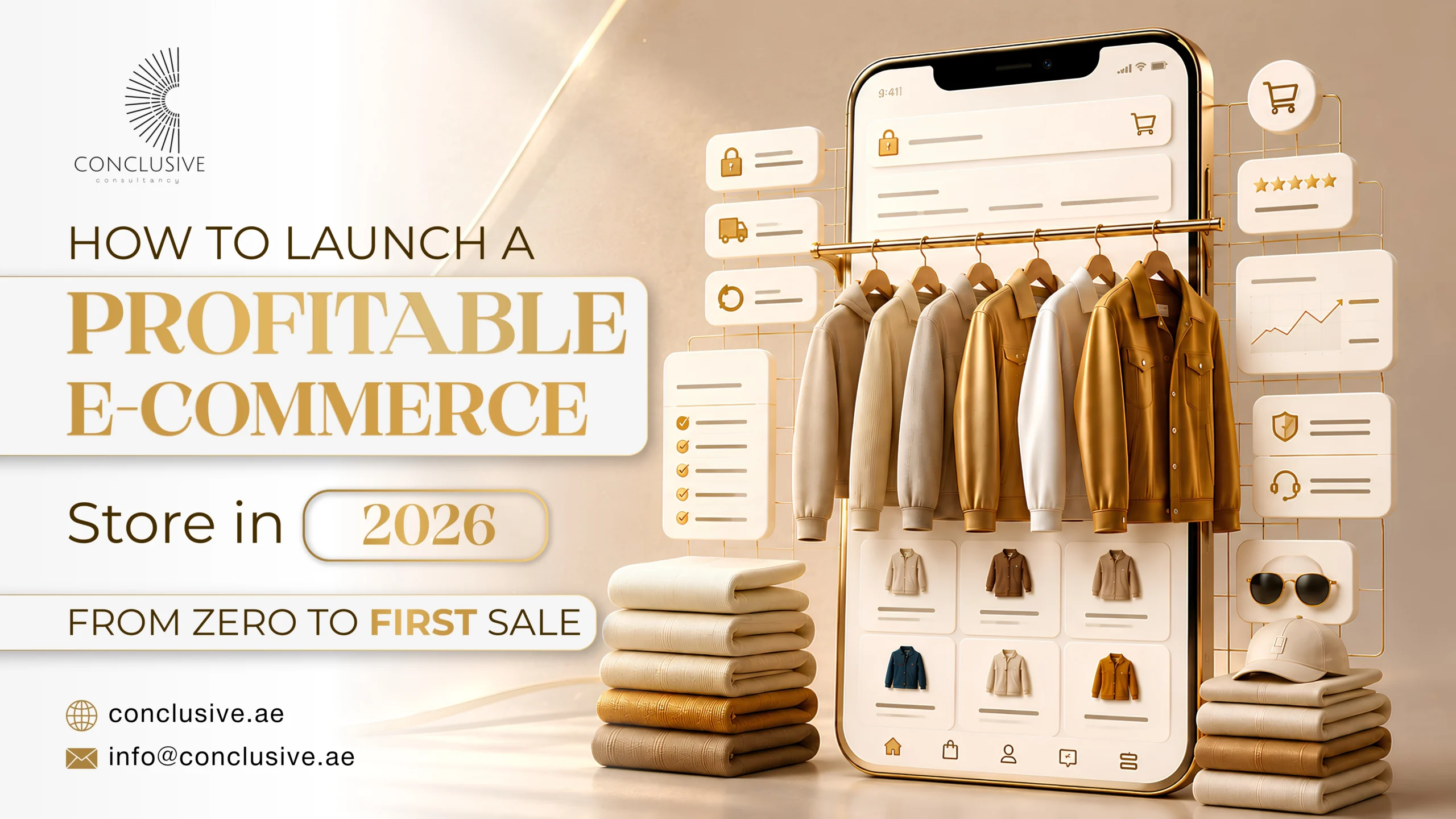
E-commerce remains one of the most profitable business opportunities in 2026. As online shopping continues to grow, entrepreneurs, creators, and brands can launch businesses with lower startup costs compared to traditional retail models.
However, profitability is not simply about generating sales. A successful e-commerce business focuses on sustainable growth, strong profit margins, customer retention, and scalable operations.
The good news is that launching a profitable online store is achievable when you follow a structured approach, from choosing the right niche to generating your first sale.
Why Most E-Commerce Stores Fail
Many online stores fail because they focus on launching quickly rather than building a solid foundation.
Launching Without Market Research
One of the biggest mistakes is choosing products based on assumptions instead of customer demand. Without proper E-commerce market research, businesses often enter oversaturated markets or invest in products that customers do not want.
Researching competitors, analyzing trends, and identifying profitable product ideas can help uncover real online business opportunities before investing time and money.
Choosing the Wrong Products
Not all products are suitable for e-commerce success.
Common challenges include:
- Low-profit margins
- High competition
- Seasonal demand
- Lack of product differentiation
The best products to sell online solve specific customer problems and provide long-term demand. Before investing heavily, businesses should focus on product validation to confirm market interest.
Building a Store Without a Sales Strategy
A website alone does not generate sales.
Many businesses fail because they have no customer acquisition plan, weak product pages, and poor trust signals. Effective E-commerce conversion optimization and a clear online store sales strategy are essential for turning visitors into customers.
Launching Your Store the Right Way
Step 1: Find a Profitable Niche
Successful stores focus on a specific audience rather than trying to sell everything.
To identify a profitable e-commerce niche:
- Use Google Trends
- Monitor social media conversations.
- Analyze competitors
- Identify market gaps
A focused niche product business often performs better than a general online store.
Step 2: Validate Your Product Before Investing
Validation helps reduce risk and avoid costly mistakes.
Methods include:
- Customer surveys
- Pre-orders
- Waitlists
- Competitor research
- Small advertising tests
Proper product validation and E-commerce product testing ensure demand exists before scaling.
Step 3: Build a High-Converting Online Store
Your website should be designed to convert visitors into buyers.
Key elements include:
- Mobile-friendly design
- Fast loading speed
- Easy navigation
- High-quality product images
- Secure checkout
- Customer reviews
Professional E-commerce website development and proper Shopify store setup can significantly improve sales performance.
Step 4: Create a Strong Brand Identity
Strong brands build trust and loyalty.
Important branding elements include:
- Professional logo
- Consistent visual identity
- Clear messaging
- Unique Selling Proposition (USP)
Investing in E-commerce branding, Brand Development Services, Business Strategy Development, and Business Strategy Planning helps businesses stand out in competitive markets.
Step 5: Set Up Payment, Shipping & Operations
Customer experience depends heavily on operational efficiency.
Focus on:
- Reliable E-commerce payment gateway solutions
- Trusted shipping partners
- Efficient E-commerce fulfilment
- Responsive customer support
Smooth operations lead to better customer satisfaction and repeat purchases.
Step 6: Drive Traffic to Your Store
Traffic generation is essential for growth. A successful E-commerce marketing strategy should include:
E-Commerce SEO
Optimized product pages, category pages, and content marketing help improve visibility through E-commerce SEO.
Social Media Marketing
Consistent Social Media Management builds brand awareness, engages customers, and drives traffic.
Paid Advertising
Meta Ads and Google Ads can accelerate growth by targeting high-intent buyers.
Email Marketing
Email campaigns help recover abandoned carts, nurture leads, and increase repeat purchases.
Step 7: Get Your First Sale
Your first sale validates your business model.
Effective launch tactics include:
- Limited-time offers
- Referral programs
- Launch promotions
- Retargeting campaigns
A successful first online sale is the beginning of your long-term E-commerce growth strategy.
Services That Help Scale Your E-Commerce Business
Professional E-Commerce Growth Services
Growing an online store requires expertise across multiple areas.
Key services include:
- E-commerce Website Development
- Shopify Store Setup
- SEO & Content Marketing
- Performance Marketing
- Social Media Management
- Conversion Rate Optimization
- Email Automation
- Analytics & Reporting
Professional E-commerce consulting services and an experienced E-commerce marketing agency can help businesses launch faster, improve conversions, and scale efficiently.
Conclusion
Your First Sale Is Just the Beginning
Building a profitable e-commerce business in 2026 requires more than launching a website. Success starts with market research, product validation, strong branding, and a clear growth strategy.
By combining Business Strategy Development, Business Strategy Planning, Brand Development Services, E-commerce SEO, paid advertising, and Social Media Management, businesses can create sustainable growth and long-term profitability.
The most successful stores continuously analyse customer behaviour, optimize their marketing efforts, and improve the shopping experience.
Ready to Launch Your E-Commerce Store?
Partner with experts who can help you build, market, and scale a profitable online business from day one. From website development and branding to SEO, advertising, and growth strategy, the right team can help turn your e-commerce vision into a successful business.